

How is Gynaecomastia Classified?
Gynaecomastia is classified into four grades based on the extent of tissue growth and the presence of excess skin. This classification helps doctors assess the severity of gynaecomastia and guide the choice of treatment.

grade I
Small growth around the areola (nipple) that is subtle and not easily noticeable.
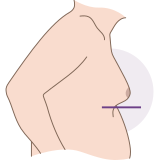
grade II
Moderate growth extending beyond the areola without excess skin, blending smoothly into the surrounding chest.
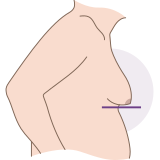
grade III
Significant growth with some extra skin, making the breast tissue more prominent and noticeable.
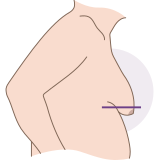
grade IV
Substantial growth with excess skin, resembling female breasts and often requiring surgical correction.
How to Do a Self-Check for Gynaecomastia?
If you’re concerned about gynaecomastia, a self-check may help you identify signs or symptoms to discuss with your doctor. Keep in mind that only a medical professional can confirm the diagnosis:
- Look for Visible Changes: Examine your chest for swelling, puffiness, asymmetry, or changes in the nipple area.
- Feel for Lumps: Use your fingertips to gently press around the nipples in a circular motion. Look for firm or rubbery lumps under the skin.
- Check for Asymmetry: Examine both sides of your chest for size differences or uneven tissue growth (asymmetry), as gynaecomastia can affect one breast more than the other.
- Assess for Tenderness: Pay attention to any pain or sensitivity around the nipple, as mild tenderness is common with gynaecomastia.


Diagnosis of Gynaecomastia
Diagnosing gynaecomastia involves a thorough evaluation to confirm the condition and rule out other medical issues. The process typically includes the following steps:
- Medical History Review: The evaluation covers the duration and progression of breast enlargement, symptoms like pain or nipple discharge, and medication use. It also includes assessing family history of hormonal disorders and underlying health conditions, such as liver or kidney disease.
- Physical Examination: The breast tissue is examined to assess its size, consistency, and tenderness. Signs of nipple discharge and unusual lumps are checked, along with a testicular exam to detect any hormonal abnormalities.
- Blood Tests: Blood tests might be ordered to check hormonal levels (such as testosterone and oestrogen) if this hasn’t been done. This helps rule out hormonal imbalances. In certain cases, patients may be referred to an endocrinologist for further evaluation and management.
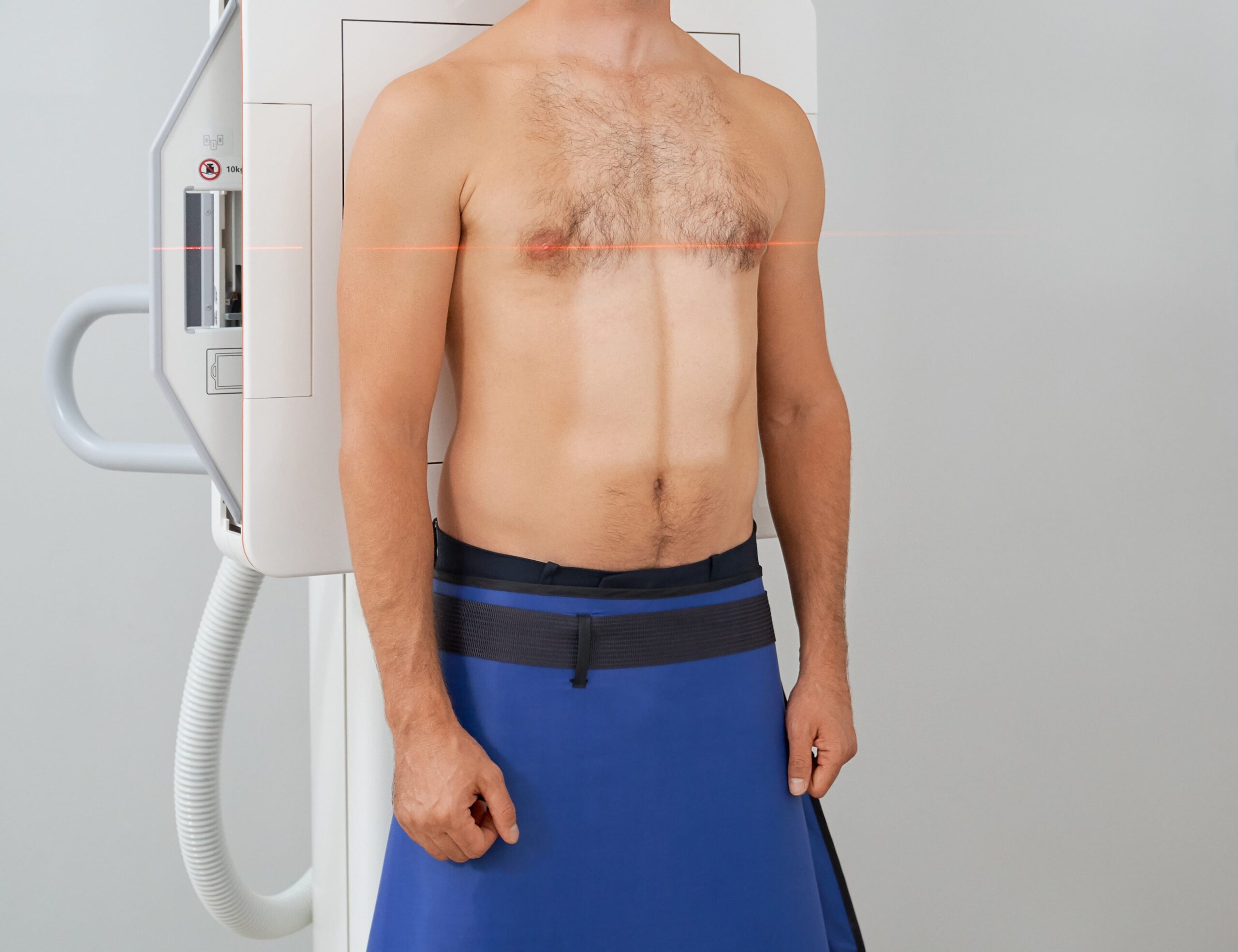
- Imaging Tests (If Needed): Your plastic surgeon may request imaging, particularly if there are any unusual lumps or concerns about male breast cancer. Ultrasound helps differentiate glandular from fatty tissue and can identify lumps, while mammography rules out cancer.
Frequently Asked Questions
While gynaecomastia itself does not cause cancer, it can increase the risk of developing male breast cancer. Regular monitoring is recommended, especially if symptoms like swelling, nipple discharge, or skin changes occur.
Conditions that resemble gynaecomastia include pseudogynaecomastia (fat accumulation without glandular growth), male breast cancer, and breast infections or abscesses. Accurate treatment is guided by proper diagnosis obtained through physical examinations and imaging tests.
Not always. Gynaecomastia that develops during puberty often resolves within a few years. However, if it persists beyond adolescence or occurs in adults, it may require treatment.

If you’re considering treatment for gynaecomastia, feel free to contact us.
Share your details, and we’ll get back to you promptly.
38 Irrawaddy Road, Singapore 329563
Mon – Fri: 10:00 AM – 6:00 PM
Weekends & PH: Closed
Contact Us Today
Considering treatment for gynaecomastia? Dr Marco provides guidance and support at every stage of your journey.
For more information or to schedule a consultation, call us at 64648075 or fill out the form below.